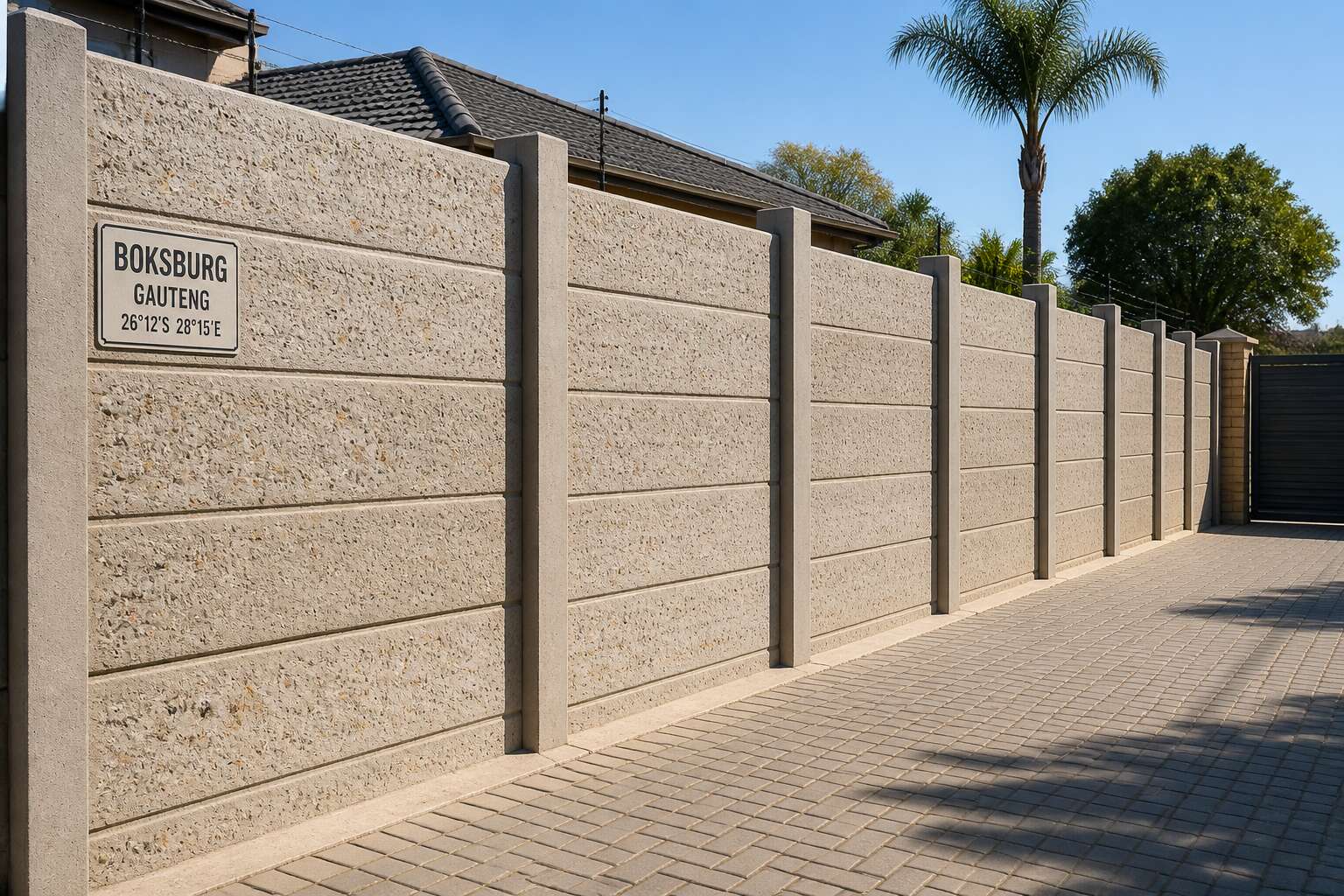
Understanding Precast Concrete Walls
Key Benefits Over Traditional Masonry
From the moment we set foot on site, the advantages of precast walling Boksburg become clear. This method isn’t just about speed; it fundamentally changes how we approach property boundaries. Instead of waiting weeks for brick layers to work through unpredictable weather, panels arrive ready to install. The efficiency translates directly into cost savings on labour, which is a significant factor for any development in Gauteng.
Many homeowners worry that choosing a modern solution means sacrificing strength. The opposite is true with precast concrete walling. These panels are engineered under controlled conditions, using high-strength concrete mixes that cure perfectly. This process results in a dense, durable surface that laughs at harsh sun and heavy rain. It offers superior impact resistance compared to traditional masonry, providing a robust security perimeter that stands firm for decades.
When considering the total cost of ownership, the scale tips further in favour of this system. Here are the key financial points we often discuss with clients:
– Zero maintenance: The smooth finish never needs plastering or frequent repainting.
– Quick installation: A standard boundary can often be erected in days, not months.
– Lower foundation costs: Panels are lighter than a double brick wall, requiring less substantial footings.
Beyond the practicalities, the aesthetic flexibility is a genuine surprise for many. Modern finishes can mimic natural stone or feature clean, smooth textures that complement contemporary architecture. This ensures that your security solution also elevates the visual appeal of your entire property, making precast walling Boksburg a wise investment for both safety and street presence. It’s a choice that delivers peace of mind and long-term value.
Common Applications in Residential and Commercial Projects
From suburban housing estates in the East Rand to industrial parks along the R21, precast walling Boksburg has become the standard for property demarcation. The versatility of these panels is what draws developers back project after project. We see them installed at schools requiring playground boundaries and at retail centres needing loading dock perimeters.
A typical installation for precast walling Boksburg might include several distinct areas:
– Perimeter security walls for new residential developments.
– Sound barrier partitions for commercial warehouses.
– Retaining wall systems for sloped erven in hilly suburbs.
Each application demands different panel heights and finishes. The controlled manufacturing process ensures consistency across hundreds of linear metres, a result difficult to replicate with site-brick construction. For developers managing multiple phases, this uniformity simplifies project planning and inspections. Customisation options, such as pre-cast capping and textured surfaces, allow architects to specify a distinct look without compromising the structural integrity that security demands.
Material Composition and Manufacturing Standards
A precast wall’s true strength is determined in the first twenty-four hours after casting. The composition of precast walling Boksburg relies on Portland cement, washed river sand, crushed stone, and welded steel mesh, all mixed under factory controlled batching. Water content is calibrated to within one litre per cubic metre, a precision impossible on open sites. Steam curing drives the hydration reaction, producing a low-porosity concrete that resists moisture and sulphates.
Manufacturing standards follow rigorous quality control protocols. Every mould is jig-aligned, and each panel undergoes dimensional checks, surface finish audits, and a drop test for edge integrity.
The production sequence includes:
1. Batching with automated weighbridges.
2. Vibration casting to eliminate honeycombing.
3. Controlled curing at 60 degrees Celsius.
These parameters explain why concrete plants across the East Rand standardise on this method. When you specify precast walling Boksburg, you inherit a documented material pedigree rather than relying on site-based guesswork.
Why Boksburg Homeowners Choose Precast Walling
Durability in Gauteng’s Climate
Gauteng’s Highveld weather is brutal. Hail, intense UV, sudden temperature swings. In Boksburg, homeowners face this reality daily. Precast walling boksburg offers a defense that clay brick simply cannot match.
The concrete density absorbs thermal stress without cracking. It handles the freeze-thaw cycle that slowly undermines weaker materials. I have seen walls rated for 50 years look new after two decades of Highveld summers. The surface resists spalling, that flaking you see on cheaper panels. There is no mortar to erode, no hollow sections to trap moisture.
For a region where summer storms arrive without warning, this resilience is not a luxury. It is basic logic for anyone building to last. Homeowners here do not take risks with their property lines.
Cost-Effectiveness Compared to Brick and Mortar
Boksburg homeowners often compare the sticker price of materials, but the real expense lives in installation and upkeep. Precast walling boksburg cuts both. Factory made panels drop into place quickly, which reduces labour hours and site preparation. There is none of the slow mortar work that brick demands. Homeowners who have done the maths usually choose precast walling boksburg for this reason.
A closer look at the numbers shows why this system wins:
- Minimal material waste because panels are cast to exact dimensions.
- Fewer subcontractors on site, so project management costs fall.
- No curing delays that stretch timelines and daily budgets.
Brick and mortar also need regular maintenance. Joints crack, pointing fails, and moisture seeps in. Precast walling boksburg uses dense concrete that does not need patching or repointing. Over a decade, those avoided repairs easily cover the initial price gap.
Design Versatility and Aesthetic Finishes
I drive past identical brick boundaries every day. Precast walling boksburg breaks that monotony with forms and textures that change the street view entirely. Panels arrive in a range of tones, from raw concrete grey to warm ochre, and the finishes handle light differently at sunrise and dusk.
Common visual choices include:
- Smooth polished surfaces for a modern, minimalist frontage.
- Exposed aggregate for honest, textured character.
- Repeated ribbed patterns for a strong architectural line.
Boksburg homeowners also appreciate how precast walling boksburg integrates with gate systems and pillar caps. There is no limitation to straight runs, curved corners can be manufactured to follow a property boundary. Pillar caps can be cast to echo the house gable detail, and decorative coping stones sit flush on top. The result is a crisp perimeter that matches the home’s architecture without calling for attention.
Enhanced Security Features
Driving through the suburbs of Ekurhuleni, one sees a recurring pattern: high walls, electric fencing, and the quiet hum of armed response vehicles. For many, security is the primary factor when choosing a boundary. Homeowners in Boksburg increasingly find that precast walling Boksburg offers the perfect synthesis of robust protection and visual appeal. This system does not merely erect a barrier; it establishes a definitive, structural statement of safety that stands against both intrusion and the elements.
The true advantage lies in the inherent solidity of the concrete panel system. Unlike palisade fencing, which offers visibility and cut points, precast panels provide a solid, unyielding surface that is exceptionally difficult to breach quickly. The weight and interlocking nature of the panels act as a natural deterrent. Furthermore, the material requires minimal upkeep to maintain its security integrity; there are no rusting bars to weaken or loose fittings to tighten. For the homeowner, this translates into a long-term, low-maintenance security solution that does not compromise on strength.
Beyond the physical barrier, the integration of modern security features enhances the protective value. The flat, smooth surface of the concrete is challenging to climb, adding a vertical obstacle that complements any electric fencing installed on top. The design also allows for seamless installation of automated gates, ensuring that access points are as secure as the wall itself.
Most importantly, choosing this perimeter provides something intangible but vital: peace of mind. The psychological reassurance of knowing your property is encased in a material that will not rot, burn, or collapse easily is significant. It removes the constant worry of perimeter failure. For families in Boksburg, investing in this type of walling is an investment in their daily tranquility, creating a safe environment where the sounds of the neighbourhood are kept at a distance, and the focus can remain on home life. This blend of practical security and resilience is why it remains the preferred choice for those who refuse to compromise on safety.
Rapid Installation and Reduced Labour
Picture two neighbours in Boksburg, both eager to secure their properties. One opts for traditional brickwork, bracing for weeks of disruption. The other chooses precast walling Boksburg contractors supply, and the difference is staggering. The panels arrive on a truck, ready to be lifted into place. Within days, the perimeter stands complete, while the brick wall remains a work in progress, dependent on weather and the availability of skilled labour.
Speed is a decisive factor for busy homeowners. Precast elements eliminate the slow, laborious process of laying bricks one by one. This efficiency directly translates to reduced labour costs, a significant advantage in today’s economy. Consider the practical benefits that contribute to this streamlined approach:
– Factory-controlled manufacturing ensures consistent quality without on-site delays.
– Fewer workers are needed on site, reducing project management overhead.
– Installation is unaffected by typical weather disruptions, keeping the schedule intact.
Consequently, the installation sequence becomes a simple, sequential operation: dig the footings, set the panels, and secure the columns. There is no waiting for mortar to cure or for courses to set. For a property owner, this means the security of a solid perimeter is achieved almost immediately. The reduced labour requirement also means less noise and fewer strangers moving through the neighbourhood. It is a logical, efficient solution that gives you back your time and your peace, without the extended chaos of a prolonged building project.
The Installation Process and Site Preparation
Initial Site Assessment and Municipal Permits
Before a single concrete panel is delivered, the ground beneath your boundary line deserves scrutiny. The City of Ekurhuleni requires a formal building plan submission for most walling structures over 1.8 metres. This approval process takes 10 to 14 working days. Factor that into your project timeline!
Municipal permits hinge on accurate site assessment. We inspect soil stability, drainage patterns, and existing services. These measurements dictate footing depth and panel alignment. Subsurface conditions can shift the entire foundation plan. A geotechnical survey eliminates surprises during excavation.
- Clear vegetation and debris from the building line.
- Mark underground water and electrical services.
- Compact the soil to the specified density.
Only after these checks pass does the precast walling boksburg crew begin installation. For precast walling boksburg, correct sequencing prevents rework. Skipping permit approval or site prep creates costs that outweigh any time saved.
Foundation Requirements and Ground Preparation
Excavation follows the site assessment. Trenches are dug to the engineered depth, usually 300 to 600 millimetres. We pour a continuous concrete footing along the boundary line. This footing carries the entire load of the panels, so compaction levels get verified before any concrete is poured.
The precast walling boksburg panels arrive ready to lift. A crane or forklift manoeuvres each panel into position. The crew sets the panels into the footing while the concrete is still green, creating a solid tongue and groove bond. Laser levels check alignment at every third panel.
Ground preparation follows a strict order:
- Strip topsoil and organic material from the trench.
- Compact the subgrade in 150 millimetre layers.
- Verify density with a compaction test.
- Allow the footing to cure for 24 to 48 hours.
Proper ground preparation prevents settlement cracks. For precast walling boksburg, a stable foundation keeps the wall true for decades.
Step-by-Step Panel Installation Techniques
It is often said that fence alignment is a silent obsession. Here is a fact: the human eye notices a crooked wall within a mere two seconds of viewing it. During the installation process, each precast walling boksburg panel undergoes a surgical level of scrutiny. The crew treats the laser level not as a suggestion, but as a strict ruling monarch.
The lift itself is where precision meets brute force. A sling wraps around the panel’s lifting anchors, and the machine takes the weight.
1. The panel lifts vertically, stopping 300 millimetres clear of the footing.
2. Workers guide it laterally, using crowbars to nudge the tongue into the groove of the previous panel.
3. A final set places the base onto the fresh mortar bed while the crane holds tension.
4. The crew installs a temporary brace before releasing the sling.
This is a dance of mechanical obedience and human judgment. Once the precast walling boksburg panels are seated, the gaps between them get packed with a stiff mortar mix. The visual result is a seamless line, free of the embarrassing undulations that plague brick courses. Patience is the foreman’s only true tool. If a panel sits even a few millimetres out of true, forcing it at the top only worsens the joint below. A sharp tap on the base with a rubber mallet does more good than ten minutes of shouting. By the time the concrete cures fully, the wall is already standing proud, immutable, and properly aligned. A bricklayer would need three days to achieve this with mortar; we do it in a morning. The back of my hand still aches from past masonry work, so this speed is a welcome relief.
Jointing, Grouting, and Finishing Touches
There is a quiet moment between the panel being set and the concrete curing. In this space, the joints become the focus. A flexible, jointing compound gets pressed into the gaps, sealing the wall against water and wind. The crew works the mortar with a hawk and trowel, forcing it deep to create a surface that will not crack under the Gauteng sun. Once the joints are packed, the grouting process begins with a stiff brush and a steady hand.
The finishing touches transform the structure from a functional barrier into a seamless facade. A damp sponge wipes away the slurry, revealing the aggregate’s natural tone. The entire line of precast walling boksburg panels is then checked for surface imperfections. Any small blemish is treated with a dry mix and a hardening agent. This routine ensures the final product meets a standard that brick can rarely match.
– The footing edge gets cleaned to expose a sharp, crisp line.
– All lifting anchors are cut flush and patched with a matching mix.
– The entire face receives a light water spray to aid the concrete’s cure.
A final sweep removes the construction dust, leaving the wall to stand as a monolith. The site is quiet, the work is done. The wall will sit there for decades, carrying the subtle colours of its own making. It is a finished work, exact and silent, with the earth around it still fresh.
Choosing a Reliable Precast Supplier in the East Rand
Key Factors to Evaluate in a Manufacturer
Roughly 80% of structural panel failures stem from substandard manufacturing and improper curing, not from the precast concept itself. This statistic underscores why due diligence in supplier selection is paramount. In the East Rand, the industrial landscape is dotted with fabricators, each offering a distinct value proposition.
A manufacturer’s yard serves as the most telling exhibit of their standards. Inspect the stockpiles for consistent colour, sharp edges, and uniform thickness. Observe the reinforcement spacing and the quality of the concrete mix. A reputable supplier will gladly walk you through their process, whereas a hesitant one might be masking shortcuts.
Consider the logistics of your specific site. Does the supplier have the capacity to deliver large panels to Boksburg suburbs with narrow access roads? Ask about their delivery fleet and their experience with local municipal regulations. A supplier familiar with the region will anticipate potential challenges.
– Verify their certifications, such as ISO 9001 or a valid NHBRC registration.
– Request a list of recent completed projects in Gauteng that you can physically visit.
– Confirm their warranty terms on structural integrity and surface appearance.
– Ask about the specific grade of cement and aggregates used in their mix.
– Enquire about their production capacity to ensure they can meet your deadlines.
The ethics of a manufacturer are reflected in their transparency regarding material sourcing. You need clarity on the compressive strength rating of their panels, usually stated in megapascals. A reliable partner will provide documented evidence of these specifications without hesitation. The trust you place in your precast walling boksburg supplier dictates the longevity of your investment. Choosing between a seasoned entity and an opportunistic newcomer is a foundational decision that carries significant weight. The right choice ensures the peace of mind that comes with a secured perimeter, while a poor one leads to structural dissatisfaction. Focus on substance over cost savings in your selection process.
How to Compare Quotes and Specifications
Price alone is a dangerous metric. The lowest quote often hides a paucity of reinforcement or a diluted cement mix that will betray you within a decade. Comparing quotes for precast walling boksburg requires scrutiny.
The true measure lies in the specification sheet. Scrutinise the compressive strength, the panel thickness, and the galvanised wire gauge. A credible supplier itemises every component, while others offer a lump sum that conceals corner-cutting.
- Check whether the quote includes steel reinforcing or merely a mesh suggestion.
- Verify that panel dimensions match your site plan exactly.
- Ask for compressive strength in megapascals and written test certificates.
Transparency about sourcing is a clear indicator of a reputable fabricator. Demand a detailed specification written into your quote. That document separates your budget from a cheap illusion of security. The difference between suppliers in the East Rand lies not in the numbers, but in what those numbers omit.
Quality Certifications and Industry Compliance
Certifications are the difference between a factory and a fabrication yard for precast walling Boksburg residents can trust. A compliance stamp is not a mere sticker; it is a statement of accountability. When evaluating a supplier, request their testing credentials before discussing delivery times. The industry is self regulated, so a manufacturer in the East Rand who invests in independent verification is paying for insurance on your behalf.
If a supplier hesitates to provide compliance documentation, consider that a red flag. The paperwork proves the concrete will withstand the test of time. Look for these specific accreditations:
- South African Bureau of Standards (SABS) compliance for cement
- South African National Accreditation System (SANAS) laboratory test results
These credentials validate the compressive strength data you need for precast walling Boksburg projects. The right supplier treats these certificates as their professional reputation, not an inconvenience.
Delivery Schedules and Site Access Considerations
Delivery schedules for precast walling Boksburg projects hinge on precise logistics. Factories operate on strict production timelines, so confirm lead times before finalising your construction programme. A reliable supplier will coordinate transport to avoid delays on site. They understand the local traffic patterns around the East Rand, particularly during peak hours, and will plan deliveries to minimise disruption. This planning prevents costly idle time for your labour crew, keeping the momentum of your build steady.
Site access remains a critical component that is often underestimated. The truck delivering your panels needs a clear, level path. Check for overhead obstructions like low-hanging branches or electrical cables that could block the vehicle. The ground must support the weight of a fully loaded truck, especially after wet weather. Consider these logistical requirements before the order arrives:
– Access width for the delivery vehicle and its turning radius.
– Cranage points for offloading and placing heavy panels safely.
– Storage area design, ensuring panels are stacked flat and protected.
Addressing these points creates a seamless workflow. Ultimately, the efficiency of your project depends on this coordination. A supplier who asks about your site’s access is a supplier who values your time. Their experience in the region ensures the right equipment arrives, from the correct transport trailers to the necessary lifting gear. This foresight transforms a complex delivery into a straightforward process, allowing your project to progress without interruption.
Warranty and After-Sales Support
A warranty is more than a piece of paper. It is a promise that your precast walling Boksburg supplier stands behind their product. When choosing a reliable precast supplier in the East Rand, ask about the terms of their guarantee. What does it cover? Cracks, spalling, or colour fading? How long does the coverage last? A confident manufacturer will answer these questions without hesitation.
After-sales support matters just as much as the initial installation. A supplier who disappears after delivery leaves you stranded. The best ones offer maintenance guidance and remain available for site visits if problems arise. Consider these points when evaluating a supplier’s after-sales commitment:
- Response time for warranty claims
- Availability of replacement panels
- Clear communication channels
A supplier who addresses these concerns with clarity values their reputation. Their warranty reflects the quality of their precast walling Boksburg products, giving you confidence for years to come.
Maintenance and Longevity of Precast Walls
Routine Cleaning and Weather Protection
Routine maintenance for precast walling boksburg properties rarely demands more than a periodic rinse. A garden hose with a standard nozzle, used once a month, clears the dust and pollen that Gauteng’s dry winds deposit on surfaces. For stubborn grime, a soft brush with mild soapy water works without harming the finish.
Weather protection begins at installation. The sealant along joints should be inspected annually, especially after thunderstorms. Cracks in the sealant are the primary entry point for moisture, and catching them early prevents deterioration.
Consider these measures:
- Trim vegetation at least 30cm from panels to allow airflow
- Ensure downpipes direct water away from panel bases
- Reapply UV-resistant sealer every three to five years
This modest attention keeps precast walling boksburg panels looking new and preserves structural integrity for decades! Concrete withstands rain and heat, but the edges and joints deserve vigilance.
Repairing Minor Cracks and Surface Damage
Repairing minor cracks and surface damage in precast walling boksburg is a task that property owners can often tackle with specific, targeted methods. While the concrete material is robust, small fissures can appear due to thermal expansion or minor settlement. Addressing these imperfections promptly prevents them from widening and exposing the internal steel reinforcement to moisture.
For a straightforward repair, the initial step involves chiseling out the crack to create a clean, wedge-shaped groove. This preparation ensures the patching compound bonds effectively. After removing all loose debris and dust with a stiff brush, apply a high-quality acrylic patching compound designed for masonry. Press the filler firmly into the groove, ensuring it is flush with the surrounding surface. Once dried, a light sanding typically leaves the panel looking seamless.
When the damage is limited to surface spalling or cosmetic chips, the approach is slightly simpler but still requires attention to detail. You will need a few essential items for this task, and gathering them beforehand makes the job efficient:
1. A wire brush to clean the affected area completely.
2. A bonding agent or primer to ensure the new material adheres to the old.
3. A trowel to apply and smooth the repair mortar.
It is crucial to match the texture of the original precast walling boksburg finishes. Many local manufacturers offer pre-mixed repair mortars that mimic the specific aggregate and color of their standard panels. This allows the repair to blend in with the existing aesthetic, preserving the uniform look of the property without leaving an unsightly patch.
Timing is a significant factor in these repairs. Avoid applying patching materials during the peak heat of the day in Boksburg, as rapid evaporation can cause the compound to shrink and crack again. Working in the cooler morning hours or late afternoon gives the material time to cure properly. After applying the patch, misting the area with water over the following days helps maintain an optimal curing environment, ensuring a lasting bond that withstands the local climate.
Applying Protective Sealants and Coatings
Prevention is always better than a patch job, and that holds true for precast walling boksburg. Once those minor cracks are sealed, the next line of defence is a quality protective coating. Think of it as sunscreen for your boundary walls; the Highveld sun is unforgiving, and a good sealant will shield the surface from UV degradation and the harsh wear of seasonal rain.
Applying a breathable, water-repellent sealer is the most effective way to extend the lifespan of your panels. This type of treatment stops moisture from penetrating the concrete matrix, which is the primary culprit behind efflorescence and freeze-thaw damage. A simple roll-on application every few years can save you thousands in future structural repairs. It is a small window of effort for a significant extension of your property’s curb appeal.
For those looking to elevate the aesthetic beyond a standard grey finish, consider a high-performance acrylic coating. These paints not only colour-match your home but also provide a tough, flexible membrane that resists chipping. The application process is straightforward, but surface preparation remains key.
– Power-wash the panels to remove any dirt or organic growth.
– Spot-prime any exposed aggregate or patched areas.
– Apply two even coats, allowing adequate drying time between applications.
Avoid painting during the midday heat, as the rapid drying can cause blistering. Instead, aim for a mild, overcast day to allow the finish to cure evenly. This simple routine ensures your precast walling boksburg remains a robust and attractive feature for decades, reducing the need for the reactive repairs we discussed earlier.
Expected Lifespan and Performance Over Time
Thirty years is a conservative estimate for precast walling boksburg. The panels endure because their dense concrete matrix resists moisture ingress and the steel reinforcement stays protected. My site inspections reveal that even two decades later, load-bearing capacity remains intact, though surface wear becomes visible.
Performance declines only through poor ground preparation or impact damage. The panels themselves do not rot, warp, or attract pests. This is why many older installations in the East Rand still stand without structural compromise.
Cost Breakdown and Return on Investment
Material Costs vs. Labour Expenses
Construction budgets hide their true costs in the gap between material invoices and site labour. For precast walling boksburg, that gap narrows considerably. A brick wall demands skilled bricklayers on site for a week or more, while precast panels arrive ready to lift into place.
The material premium looks real on paper, but the labour savings offset most of it immediately. Project managers report fewer site disruptions and shorter equipment hire periods. When you calculate the fully installed cost, the numbers often converge.
The difference sits in what you avoid:
- Extended scaffolding rental
- Weather related downtime
- Repeated mortar mixing and cleanup
- Supervision hours spent on site
That avoided spending becomes the return, visible in the final account and again decades later when the wall still stands untouched.
Comparing Precast with Brick and Timber Alternatives
Over a 25 year horizon, timber walling demands multiple replacement cycles. That spending shows up as a recurring line item in maintenance ledgers, not a single capital outlay. Precast walling boksburg sits on the opposite end of that spectrum. The real comparison appears at year five, year fifteen, and year twenty five, long after the initial quote fades from memory.
A complete precast cost breakdown captures nearly everything in one procurement:
- Panel manufacturing and transport to site
- Crane or boom hire for placement
- Foundation concrete and reinforcing
- Jointing compound and finishing materials
Those four items represent the entire investment. No painting cycle. No rot inspections. No bricklayer callouts. Brick delivers predictable results with patience and skilled labour. Timber wins on the quote sheet and loses on the ledger. Precast walling boksburg compresses the variables into one controlled sequence, which is exactly what project accountants want to see.
Potential Hidden Costs and How to Avoid Them
The arithmetic of precast walling boksburg rarely disturbs a budget review, provided the scope is defined before the first excavation. Procurement collapses into a single sequence: manufacturing, delivery, crane time, and foundation work. That predictability converts into a return on investment that becomes visible in the third year, when alternative materials usually demand their first maintenance cycle.
Hidden costs surface when site conditions contradict the original quotation. Rock outcrops, buried rubble, or an unexpected water table extend excavation hours. Dolomitic ground, common in parts of Gauteng, may demand additional soil stabilisation. Municipal inspection delays, though not tied to the material itself, also push labour flowers into overtime. The remedy is straightforward:
- Confirm the geotechnical report before signing the supply agreement.
- Stipulate a fixed crane and transport rate in writing.
- Verify the warranty covers joint sealant, not just panel structure.
A reputable precast walling boksburg supplier will itemise these variables rather than bury them in a lump sum. If the quote lacks line items for site access or panel offloading, ask for clarification. That scrutiny separates a professional estimate from a placeholder figure. The final cost, when all variables are declared, holds no surprises. That financial clarity, more than any aesthetic or installation speed, anchors the smart procurement decision.
Impact on Property Value and Curb Appeal
The price of precast walling boksburg breaks down with unusual transparency, which is a rarity in construction. My experience shows the arithmetic splits cleanly into three streams: material supply, foundation preparation, and installation logistics. The panels themselves carry a fixed factory price. The foundation depends on your specific soil conditions, a variable I always ask about first. Crane hire and transport are market rates, but they are stable and predictable.
1. Panel manufacturing and delivery costs.
2. Groundworks, including excavation and concrete footing.
3. Crane operation and the installation crew.
The real return on investment emerges when you assess property value. A solid boundary changes the perception of a plot before the front door is even seen. Buyers in Boksburg respond to a wall that requires zero maintenance and promises decades of service. Curb appeal, in this context, is not about ornamentation. It is the quiet confidence of a defined, secure perimeter. The structure projects permanence, and that permanence translates into a higher asking price on the open market. In my view, the initial outlay becomes an appreciating asset, not merely an expense.

0 Comments