Understanding Precast Walls in Emalahleni
What Are Precast Concrete Walls?
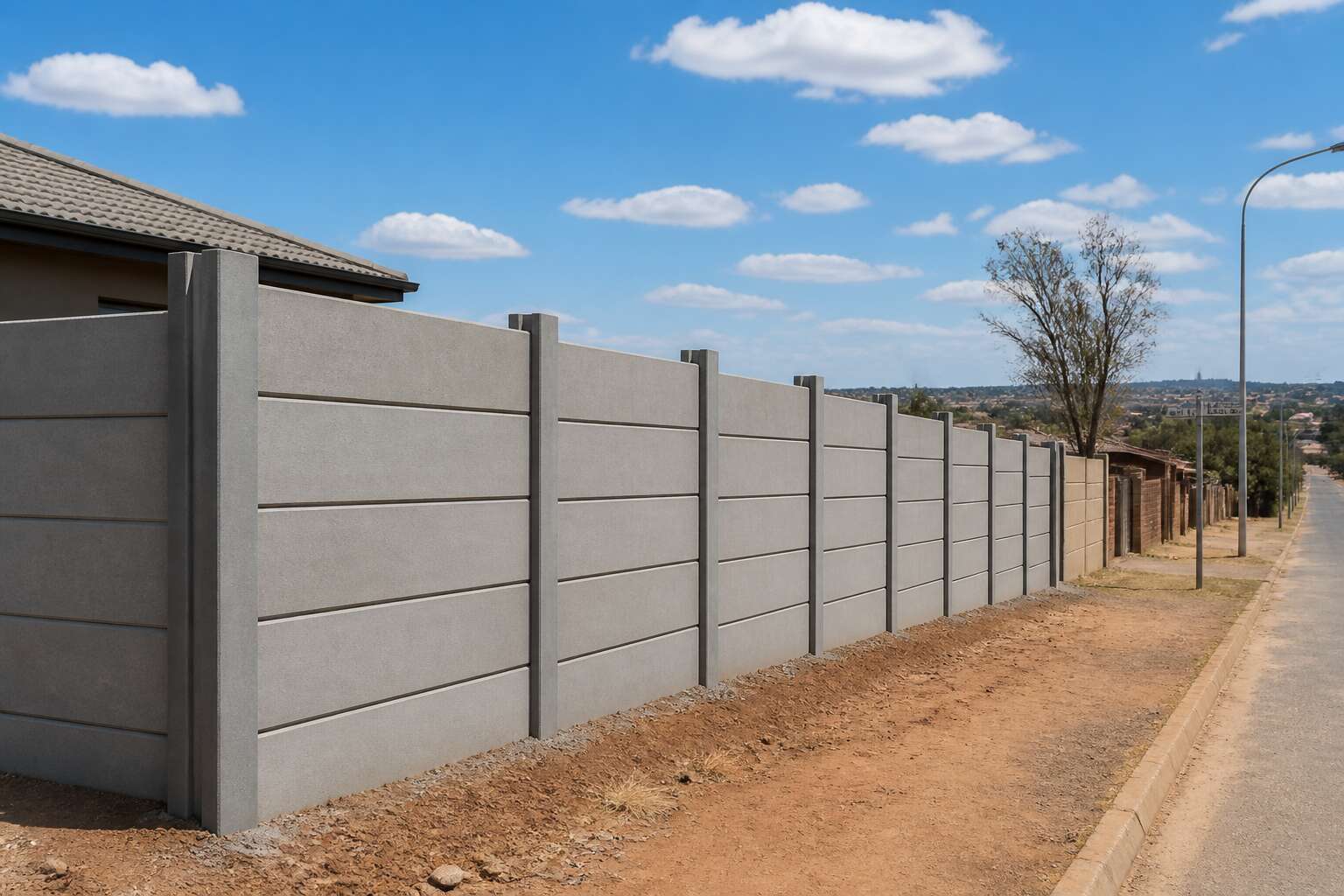
Precast concrete walls in Emalahleni are not an afterthought in local construction. They arrive on site fully formed, eliminating the tedious process of erecting formwork and waiting for wet concrete to cure. The Mpumalanga highveld brings thunderstorms and coal dust, so walls need to endure both moisture and abrasive grit. Precast walls emalahleni homeowners choose today are manufactured under controlled factory conditions, then transported as finished panels that crews bolt into position rapidly.
Consider what these walls deliver:
- Uniform strength, since curing conditions stay consistent at the factory.
- Reduced on site labour, because panels are ready to install immediately.
- Dense surfaces that resist the persistent coal dust of the region.
The sequence is simple. A local supplier casts panels to your measurements, delivers them to your plot, and fixers secure them within days. I have seen enough half-finished brick walls around town to appreciate the certainty that precast walls emalahleni provide. Honestly, that predictability is refreshing!
Why Choose Precast Walls for Emalahleni Properties
The decision to invest in perimeter security here deserves more scrutiny than a quick quote. Many property owners overlook the specific geological conditions of the Mpumalanga highveld. The soil in this region, often rich in clay, shifts dramatically between the dry winter months and the heavy summer rains. A rigid, cast-in-situ wall can crack under this movement, but precast walls emalahleni are designed to accommodate slight ground shifts due to their panel joint systems.
Why choose precast walls for Emalahleni properties? The answer often lies in the installation sequence. You are not waiting for concrete to cure in freezing winter temperatures, which slows traditional building down considerably. Consider the immediate advantages:
– The panels arrive with a smooth finish that is easier to clean of coal dust residue.
– Installation is completed in days, not the weeks required for masonry.
– The interlocking tongue and groove design reduces the risk of water ingress through joints.
This approach offers a level of certainty that is rare in local construction projects. You see the final result taking shape within hours, not months. For a property that needs to be secured quickly, this speed is a tangible benefit. It eliminates the prolonged period where your boundary is vulnerable, which is a real concern for sites near industrial operations. The factory finish also means less maintenance when you compare it to plastered walls that often blister in this climate.
Adapting to Emalahleni’s Climate and Terrain
The Highveld’s expansive clay soils and sharp seasonal shifts demand more from a boundary than standard brickwork. In Emalahleni, summer downpours saturate the ground, and winter frost contracts it, so a rigid wall often cracks. Precast walls emalahleni handle this movement through panel joints that flex without structural failure. They sit on engineered footings that account for local heave, reducing tilt risk. Consider the practical advantages:
- Installation happens in days, not weeks, so the wall faces fewer weather cycles.
- The concrete mix resists acidic runoff common in mining areas.
- Panels are cast offsite, ensuring consistent quality despite dusty conditions.
Because the terrain is rarely uniform, each panel is aligned individually, letting the wall follow natural contours. That is why precast walls emalahleni offer a long-term solution for property owners who expect their perimeter to endure.
Different Types of Precast Wall Panels Available
Precast walls emalahleni offer more than a single silhouette. The range of panels available locally is broader than most property owners expect. You may select the stock standard palisade-style panel, which provides visibility alongside security. Alternatively, solid panels create complete screening, and textured finishes emulate stone or brickwork.
Local suppliers typically keep several configurations in rotation:
– Smooth-faced panels for clean, modern boundaries
– Exposed aggregate panels that catch the Highveld light
– Double-sided panels with a finished appearance on both faces
– Custom heights and integrated gate sections for irregular access points
The thickness of these panels spans from 50mm to 75mm, and reinforcement varies according to the load and span required. That variation determines how your boundary performs over time.
Key Benefits of Precast Walls for Emalahleni Residents
Superior Durability and Structural Strength
When it comes to buildings that need to withstand the demanding Highveld environment, precast walls emalahleni offers a definitive advantage. The region’s industrial activity and challenging weather patterns demand structures that don’t compromise. Consider the inherent benefits of factory-controlled curing, which eliminates the guesswork of on-site pouring. This process ensures a level of density and uniformity that simply isn’t possible with traditional brickwork.
The result is a barrier that offers superior durability without the typical maintenance headaches. Regarding structural strength, these panels handle significant impact and load transfer with ease.
– Enhanced fire resistance for added safety
– Superior acoustic separation for quieter interiors
– Minimal maintenance costs over the building’s lifespan
The installation process itself contributes to the integrity, as the heavy panels are mechanically fixed to create a monolithic finish. This translates to a long-term capital investment that protects your property value. For local developments, choosing this method means relying on a system engineered for longevity and robust performance, ensuring your asset remains steadfast for decades.
Cost-Effective and Time-Saving Installation
In the heart of Mpumalanga, where the rhythm of industry never truly sleeps, time is the most valuable currency for property owners. The true value of precast walls emalahleni emerges when you consider the logistics of a build. Traditional methods often grind to a halt, waiting on weather or the availability of skilled bricklayers. Precast eliminates this uncertainty entirely.
Because the concrete panels are manufactured off-site in a controlled environment, the installation phase becomes a precise, rapid operation. Once the foundation is set, crews can secure panels in a fraction of the time it takes to lay blockwork. This rapid turnaround translates directly into significant savings on labour costs and site overheads. For a business, this means less disruption to operations and a faster return on investment. For a homeowner, it means securing your property without months of ongoing construction noise and mess. With precast walls emalahleni, you are not just buying a barrier; you are buying back your schedule.
Aesthetic Flexibility with Various Finishes
They say curb appeal adds up to seven percent to a property’s value. For precast walls emalahleni, that appeal is entirely your choice. You are not stuck with a single shade of municipal grey. The panels arrive as a blank canvas, ready to mimic the look of natural stone, brick, or a smooth, modern plaster finish. You get the structural integrity of concrete without the architectural boredom.
The finish you select does more than just please the eye. It changes how the wall interacts with Emalahleni’s harsh sunlight. A lighter, textured surface reflects heat and masks the fine dust that settles on everything. A smooth, pigmented panel is easier to hose down than a rough brick face. This is about picking a material that works for your specific site conditions. Aesthetics are practical when they reduce your maintenance workload.
Consider the range of options available to tailor the look to your property:
– Exposed aggregate for a rugged, premium texture
– A smooth, painted surface in a custom colour to match your branding
– A profiled finish that mimics brick or stone coursing
– A simple, clean face for a minimalist industrial look
Every panel is cast in a controlled environment, which means the colour and texture will be consistent across the entire installation. No mismatched batches. No faded sections after a single Highveld summer. You specify exactly how the wall should look, and the manufacturer replicates it with precise accuracy. Precast walls emalahleni offer a way to stamp your identity on the perimeter without relying on the fluctuating skills of a tiling crew or the whims of the weather. It is the difference between hoping it looks right and knowing it will.
Low Maintenance Requirements Over Time
The true cost of a wall is measured in the hours you spend caring for it. Precast walls emalahleni demand almost nothing after installation. There is no repainting every second year, no patching cracks from a wet winter, no scraping rust stains off a cheap gate frame.
I have watched homeowners spend weekends with a pressure washer and a bucket of chemicals. That routine disappears with precast concrete. The panel surface is dense, so dust and grime struggle to stick. A quick rinse with a garden hose restores the original face.
- No sealants needed for the panel surface
- No water damage or efflorescence
- No timber to rot or metal to corrode
Over a decade, the difference in upkeep becomes a pile of rands saved. For Emalahleni residents, where coal dust and airborne particles sit on every surface, that low maintenance requirement is a practical necessity. Precast walls emalahleni require no constant attention.
Eco-Friendly and Sustainable Building Material
The concrete industry accounts for roughly 8% of global carbon emissions, but the manufacturing method determines the real environmental cost. Precision molds used in precast walls emalahleni produce almost no waste. Offcuts return to the production cycle instead of filling a landfill.
That efficiency matters in Emalahleni, where the landscape carries decades of coal mining. Every choice counts.
Precast concrete panels bring thermal mass to your property. They absorb heat during the day and release it slowly at night, reducing reliance on electric heating and cooling. For residents watching energy bills climb, that natural regulation cuts carbon output.
Precast walls emalahleni skip the chemical sealants, timber treatments and metal coatings common in other fencing systems. Each burdens the environment from manufacturing to disposal. Removing them keeps harmful compounds out of local soil and water.
A precast wall stands for decades, meaning fewer raw materials extracted and less construction debris.
Practical Applications of Precast Walls in Emalahleni
Commercial and Industrial Security Walls
The industrial outskirts of Emalahleni wear a permanent pall of coal dust, and here security takes on a heavier meaning. A perimeter breach can mean lost stock, damaged equipment, or worse. The precast walls emalahleni operators install are not decorative gestures. They are engineered barriers, heavy enough to shrug off a loader’s impact and tall enough to defeat a ladder.
For commercial and industrial sites, the applications are direct.
– Storage yards use them to block sightlines and slow intruders.
– Substations surround themselves with panels rated for electrical safety.
– Fuel depots rely on the mass to stop errant vehicles.
– Processing plants configure panels to deflect noise and dust.
Each unit arrives fully cured, ready to be craned into position. A contractor can set a hundred linear metres in a single week. The concrete is unforgiving to cutting tools. Once grouted together, the wall becomes a continuous slab of stone. For precast walls in Emalahleni, the benefit is identical across sites: a hardened perimeter that asks for respect and gives none.
Retaining Walls for Landscaping and Slope Management
Emalahleni’s ground does not stay where you put it. Rainfall and shifting mine voids conspire against a level landscape. Precast walls emalahleni solve this with rigid, interlocking panels.
For slope management, these walls stop lateral soil movement. They allow water to drain through, preventing pressure buildup that collapses ordinary masonry. For landscaping, they turn a useless incline into a series of usable terraces.
- They create flat areas for patios or gardens.
- They channel runoff away from foundations.
- They stabilise the cut faces of a driveway.
Contractors set precast walls emalahleni in a day, not a week, because the concrete arrives pre-cured. The result is a boundary that holds its ground, season after season.
Acoustic Barriers for Noise Reduction
Emalahleni is a loud place! The N4 thunders past, coal trains grind their steel, and heavy machinery never sleeps. Between your property and that noise, a precast wall can stand as a solid barrier.
Precast walls emalahleni absorb and deflect sound far better than wire fencing or thin palisades. The sheer mass of the concrete interrupts the sound wave’s path. I have seen these walls turn a roaring site boundary into a quiet courtyard.
A well-designed acoustic barrier will:
– Reduce residual noise by up to 25 decibels
– Create a calmer outdoor living space
– Block the visual dust and movement of industrial traffic
The panels interlock tightly, leaving no gaps for sound to leak through. For homes near the industrial belt, precast walls emalahleni offer a rare pocket of silence. The same wall that protects your ground also protects your ears.
Agricultural Walls for Farms and Livestock Facilities
Beyond the industrial belt, Emalahleni’s farmland tells a different story. The wind scrapes across open pastures, and the rumble of coal trucks finds its way to the quietest kraal. Wire fencing marks a boundary, yet offers nothing to the animals behind it. Precast walls emalahleni serve a different purpose here. Their dense panels form a windbreak around calving pens, a shield against stray dogs, and a visual barrier that calms nervous herds.
For local farmers, the uses are specific:
- Solid boundary walls around feedlots prevent livestock from pushing through weak points
- Screen walls hide birthing areas from road traffic
- Enclosures keep jackal out of lambing pastures
- Permanent windbreaks reduce evaporation from water troughs
The installation moves fast. Panels arrive on a flatbed and stand within days. Precast walls emalahleni do not rot like timber or sag like wire. They settle into the red dust and remain there through every season.
Installation Process and Expert Tips for Emalahleni Projects
Preparing the Site and Laying Foundations
Site preparation determines how long your precast walls emalahleni will last. Begin by clearing the area of vegetation and debris. Then, level the ground and compact the soil thoroughly. A stable base prevents shifting after installation.
For precast walls emalahleni, follow these expert steps:
- Test the soil bearing capacity before pouring concrete.
- Mark utility lines to avoid interruptions during trenching.
- Ensure a slight slope away from the wall for water runoff.
Lay a continuous concrete strip footing that is at least 200mm deep. This foundation must be perfectly level. Allow it to cure for a minimum of three days. Position the first panel carefully, using a spirit level for accuracy. Proper alignment now saves costly adjustments later.
Transporting and Handling Precast Panels Safely
Transporting and handling precast walls in Emalahleni is where efficiency is won or lost.
Getting these substantial concrete panels from the factory to your boundary line requires careful planning. The Highveld’s mining roads are notoriously tough on heavy loads, so route selection is critical before a single unit leaves the yard. You’ll want to confirm that access roads can support the weight of a flatbed truck, especially after the summer rains turn everything to mud.
Once on site, the real skill comes into play. A mobile crane is the standard choice for lifting, but its placement needs to be calculated. Soft ground around a new development can cause a stabiliser to sink, so using outrigger pads is non-negotiable. The panels should be lifted from the truck using the embedded lifting anchors, never from the edges, as this can cause hairline cracks that will eventually compromise the structure.
Here’s how a typical installation sequence flows on an Emalahleni project:
– Delivery and Offloading: The truck arrives on a pre-agreed schedule. Panels are inspected for transport damage before being lifted off.
– Positioning on the Footing: The first panel is lowered onto the prepared, cured concrete footing. It’s crucial to bed it into a wet mortar bed for even load distribution.
– Alignment and Bracing: Using a spirit level and string lines, the panel is brought to plumb. Temporary acrow props are installed to hold it in place while the next panel is set.
– Connection and Grouting: Once the next panel is aligned, the steel tie-in plates are welded or bolted. The vertical joints are then grouted to lock the wall together.
Working with precast walls in Emalahleni also means respecting the weather. The wind can pick up with little warning, and a tall, unbraced panel acts like a sail. It is a standard safety protocol to secure every panel with bracing the moment it is released from the crane. Never leave a free-standing panel upright overnight without proper support.
Finally, the finishing touches matter as much as the heavy lifting. The top course should be finished with a capping detail to prevent water ingress, and the joints should be struck smooth for a clean aesthetic. When the concrete is cured, backfilling against the wall should be done with granular fill, compacted in thin layers. This prevents lateral pressure from building up and pushing the wall out of alignment, ensuring your new precast perimeter stands solid for decades against the Highveld elements.
Erecting and Joining Panels with Precision
A single misaligned panel can ripple through an entire boundary line, turning a clean perimeter into a constant headache. For precast walls emalahleni, the erecting phase demands a steady hand and a sharp eye. Each unit descends from the crane into its wet mortar bed, and I always check the level before the chains slacken. Once plumb, the acrow props bite into the ground, holding the slab like a sentinel.
Joining panels is where precision becomes permanence. The steel tie plates need a clean weld, not a quick tack, because the Highveld wind will test every connection. Grout the vertical joints in one continuous pour to avoid cold seams. Seasoned contractors often follow this rhythm:
- Set the first panel true, then brace it immediately
- Align the next panel against a taught string line
- Weld the plates, then grout before the day heats up
Rushing the cure only invites cracks. A patient, methodical crew makes precast walls emalahleni stand straight for decades.
Weather Considerations and Timing in Emalahleni
The Highveld weather in Emalahleni runs on its own timetable. Mornings often deliver calm air, but by midday the wind gathers force and summer thunderstorms can appear without warning. Installers of precast walls emalahleni understand this pattern, scheduling grout pours before the heat builds and the sky turns threatening.
Winter introduces frost that slows the curing process, so the mix needs more time to set before any load is placed. Summer rewards an early start and a disciplined finish. A sensible routine looks something like this:
- Check the early morning forecast for wind gusts
- Dampen concrete surfaces before the sun climbs too high
- Pour and finish grout in one sustained motion
- Cover fresh joints if rain is predicted by lunchtime
Hiring Local Contractors vs. DIY Installation
Hiring local contractors versus attempting a DIY installation is a decision that carries more weight than the initial cost. The margin for error in precast wall erection is slim, and the consequences of a misaligned panel are expensive to correct. Contractors familiar with precast walls emalahleni bring experience with the region’s specific ground conditions and the logistical quirks of transporting heavy panels through residential streets or rural farm roads.
A contractor’s price includes the skilled labour force and the specialised lifting equipment required to place panels without damage. When you consider the rental costs of a crane or the risk of toppling a panel during a DIY attempt, the savings often evaporate. I’ve watched projects where a weekend crew struggled for days with alignment, only for a professional team to finish the same span in a single morning. The physical strain and technical knowledge required are frequently underestimated.
Local expertise also extends to navigating municipal regulations and ensuring the installation meets the standards expected by Emalahleni authorities. While a DIY approach offers a sense of personal accomplishment, it demands a steep learning curve. The practical realities of curing schedules and the need for precise joint sealing favour those who do this work daily.
Consider the following local factors when making your choice:
– The availability of skilled labour in the Emalahleni area and the cost of hiring specialised equipment.
– The specific requirements for panel foundations on the region’s varied soil types.
– The safety protocols necessary for lifting and setting tall wall sections.
The choice ultimately rests on your comfort with heavy machinery, your tolerance for potential delays, and the value you place on your weekends. The data from completed projects in Mpumalanga consistently shows that professional installation reduces the total project timeline and provides the assurance of a job done right the first time. For many property owners, the premium paid for professional precast walls emalahleni services is the cost of certainty.
Choosing the Best Precast Wall Suppliers in Emalahleni
What to Look for in a Reliable Supplier
Choosing the right supplier for precast walls in Emalahleni is not a decision to rush. A poorly made panel can crack under the region’s heavy summer rains or warp in the highveld heat. The cheapest quote often hides substandard concrete or weak reinforcement. Your boundary wall should outlast your neighbour’s enthusiasm for loud braais, so demand quality from the start.
Look for a manufacturer that offers transparent specifications. They should gladly share mix ratios, steel gauge, and curing times. Ask for local references and visit the yard in person. Check if the panels are uniform in colour and thickness. A reliable supplier also handles delivery and installation with care, because broken edges on arrival are a bad omen.
Here are the essentials to verify before signing any contract:
– Current SABS certification for concrete products
– A physical address, not just a phone number
– A written guarantee on structural integrity
– Clear communication about lead times and site access
Also confirm that they know Emalahleni’s specific soil conditions. Mining subsidence is a real factor here, and a supplier who ignores that is selling you trouble. Do not settle for smooth talk; ask pointed questions about load-bearing capacity and drainage. A trustworthy company welcomes scrutiny. The right choice saves you repair costs and a great deal of frustration later.
Top Local Manufacturers and Distributors
The precast walls Emalahleni market operates on reputation. The best local manufacturers do not rely on national advertising; their work is visible at mine sites, commercial developments, and residential estates across the region. A name spreads quickly here, and it spreads for the right reasons or the wrong ones.
A top distributor understands that a panel is not a product. It is an answer to a specific problem: ground movement, security needs, weather exposure. I have seen so called cheap suppliers undercut the market and deliver panels that crack within a season. The manufacturers who thrive here embed local knowledge into every unit they cast.
When you compare precast walls Emalahleni manufacturers, examine their operation directly:
- Quality of the casting yard and equipment
- Range of panel sizes and finishes held in stock
- Size and capacity of the delivery fleet
- Standing among local contractors and engineers
Customization Options for Panels and Colors
A 25mm difference in panel thickness can alter the price per metre by double digits. That is the granularity of decision-making when selecting precast walls Emalahleni suppliers. Customization is about matching the product to the site’s specific demands.
The best precast walls Emalahleni suppliers offer surface textures from exposed aggregate to smooth fair-face finishes. Colour options include charcoal, slate grey, and oxide blends that resist fading under the Highveld sun. Some manufacturers cast panels with integrated reinforcement points, while others offer split-face patterns that mimic natural stone.
When evaluating a supplier’s customization capacity, inspect these details:
- The variety of moulds maintained in their casting yard
- Their ability to replicate a specific colour sample across multiple batches
- The range of coping profiles available for wall tops
A supplier who cannot match colour across deliveries will produce an uneven wall. Concrete mix, curing time and release agents all affect the final shade.
Warranty, Quality Guarantees, and After-Sales Support
Most people sign a delivery note and assume the story ends there. I find that the warranty tells you how a supplier truly regards their work. A reputable precast walls Emalahleni provider will offer a written guarantee covering structural defects like cracking, spalling, or reinforcement corrosion for at least five years. They should also document their testing regime for concrete strength and water absorption.
Before committing, ask about their after-sales protocol. What happens if a panel arrives chipped? Who bears the transport risk? The best suppliers maintain a response team for repairs and replacements.
Look for these specific assurances:
- A defined claims process with timeframes
- Replacement panels kept in stock for matching
- Transferable warranties for future property sales
These details separate durable precast walls Emalahleni suppliers from those who disappear after payment.
Obtaining Quotes and Comparing Cost Estimates
Getting quotes for precast walls Emalahleni property owners request can feel like comparing apples to oranges. One supplier quotes a basic panel, another includes delivery, and a third adds installation but hides the cost of the crane hire. The trick is to ask every supplier for a full breakdown before you commit to a single figure. When you receive multiple quotes, look beyond the bottom line. The cheapest price often reflects thinner panels or a weaker concrete mix, which will cost you more in repairs down the line.
A reliable supplier will happily explain their pricing structure. They will tell you exactly what the quote covers, from the foundation footing to the finishing capping. Some even offer a package deal that includes the transport of the panels from the factory to your site, which can save you a significant amount of money. Others will charge you per kilometre, so it is worth checking their delivery radius and whether they have a depot close to the Highveld region.
Here is what I look for when comparing estimates for precast walls in Emalahleni:
1. The specific dimensions of the panels, including the thickness and the height above ground level.
2. The concrete strength rating, usually measured in megapascals, to ensure it suits the local soil conditions.
3. The type and gauge of the reinforcing steel used inside the panel.
4. Whether the quote includes the digging of the trench, the casting of the footing, and the installation of the panels.
5. The expected timeline from deposit payment to project completion, and whether that timeline is written into the contract.
Once you have those details on paper, compare them side by side. A slightly higher quote becomes a bargain when it includes installation, a stronger mix, and a company that backs its work. In the end, the right supplier for your project is one who offers transparency, a clear written contract, and a price that reflects the quality of the materials and labour involved.

0 Comments